Nutrients and organic matter placed where tree roots actually feed, so trees in compacted, nutrient-poor urban soil can thrive.
Trees in forests get a steady supply of leaf litter and nutrients. Trees in yards usually do not. Lawn clippings are bagged, leaves raked, soil compacted by construction and mowing, and what is left is often low in organic matter. Deep root fertilization is a way to feed trees the way nature would.
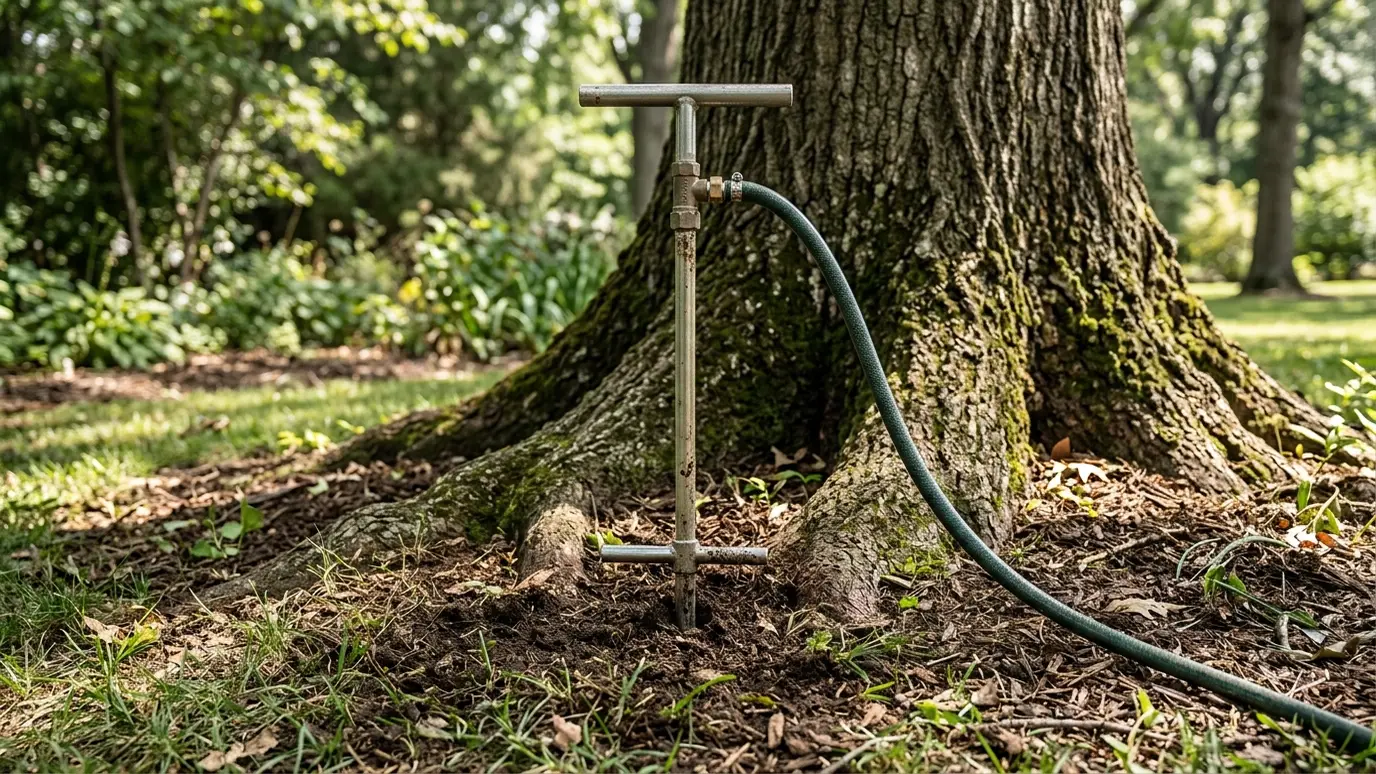
We apply a balanced, slow-release fertilizer or organic amendment into the root zone using a low-pressure injection or a soil-surface method. The goal is to deliver nutrients into the top foot or so of soil, where most feeder roots live. A Certified Arborist checks soil, pH and tree condition first to be sure fertilization is the right fix and not just a habit.
Fertilization helps when soil tests or leaf symptoms show a deficiency, when trees are growing slowly in poor soil or when they are recovering from stress or construction. It does little for trees that are already in good condition.
We apply nutrients in a grid within the dripline, using a probe to place them in the active root zone. Slow-release formulas and organic products reduce the risk of burning roots. Timing is usually early spring or fall.
Fertilizer cannot cure compaction, root rot, poor drainage or pests. If those are the real problem, we say so and recommend aeration, mulching, drainage changes or pest control.
New trees usually need roots to grow before they need fertilizer. We recommend waiting until the tree is established, then feeding if soil tests call for it.
Nutrients placed where roots live.
Soil and tree checked first.
Gentle on roots and the environment.
We tell you when feeding will not help.
Stronger trees in drought and heat.
Spring and fall windows.
Every topic has its own page with what to expect and how an arborist helps.
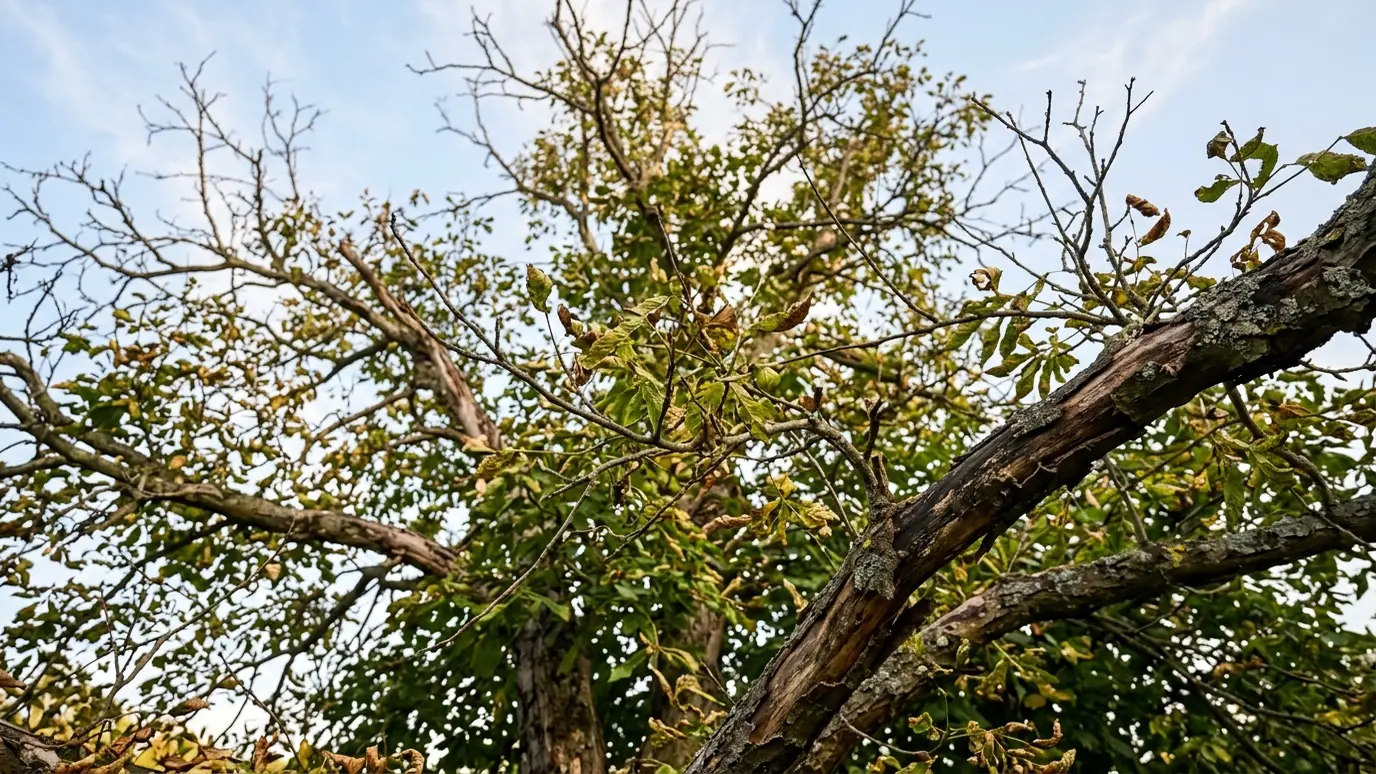 Common situationDeclining TreesThinning leaves, dying branches and odd growth are signals. Catch them early and many trees can recover.Learn more
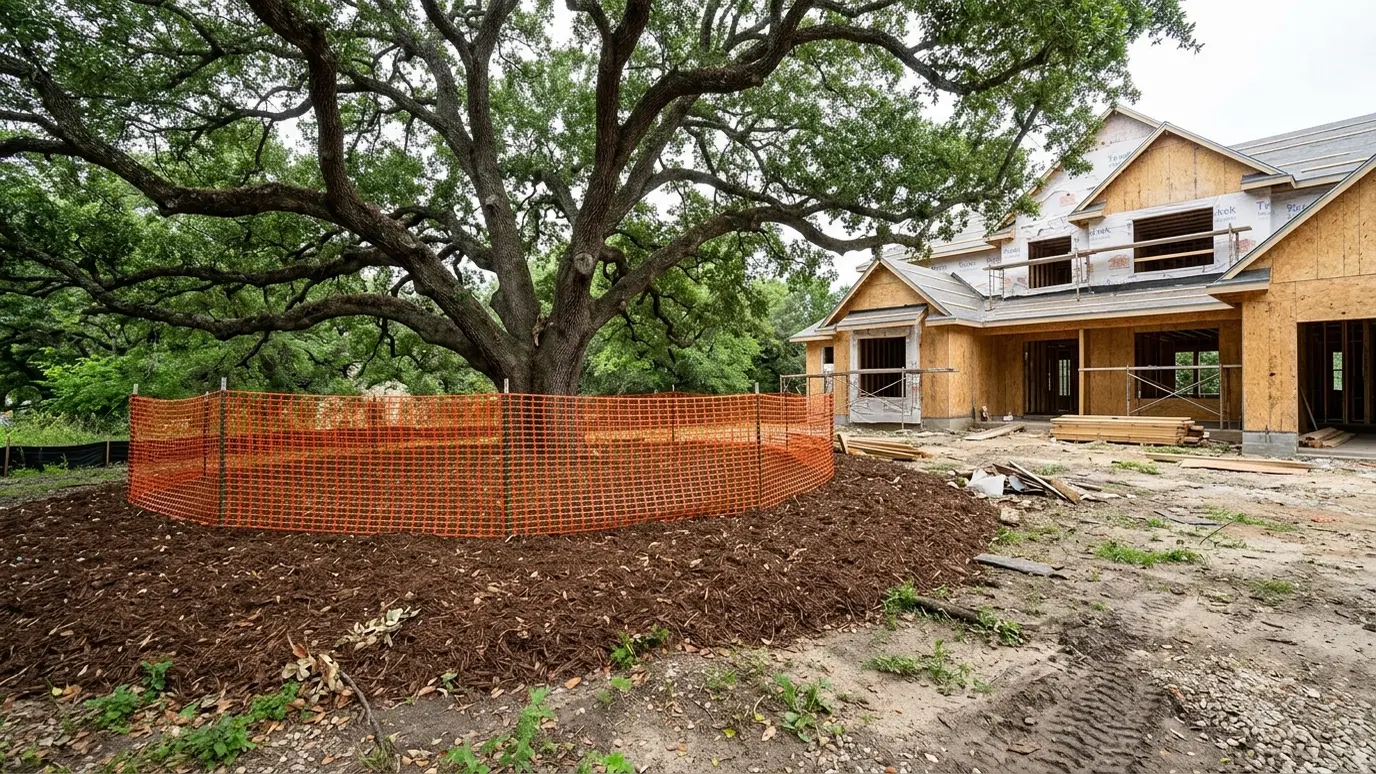 Common situationTrees and ConstructionNew homes, additions, driveways and pools are hard on trees. A plan before the equipment arrives is the…Learn more
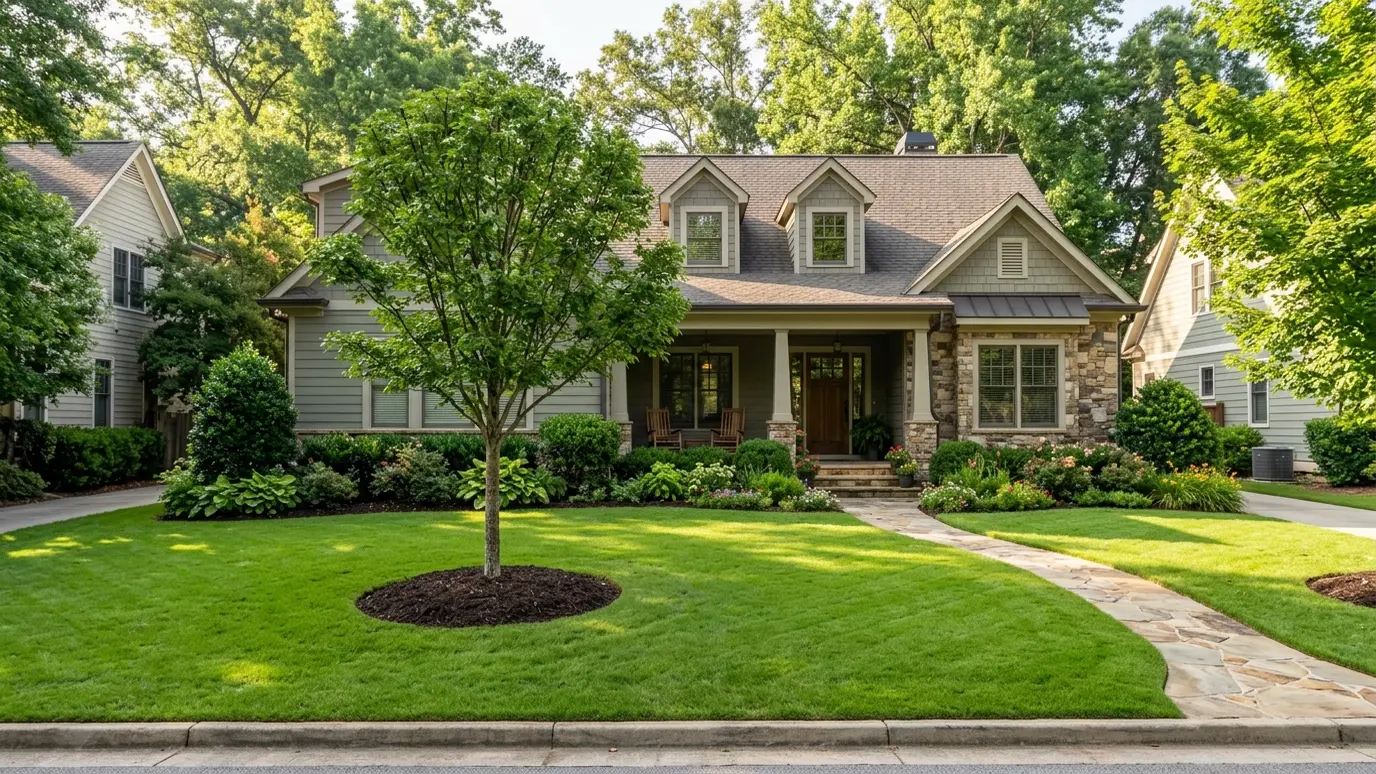 Common situationSelling Your HomeHealthy, tidy trees help a home sell. Hazards and overgrowth can derail a deal. Get ahead of both…Learn more
Answer seven questions about a tree and get a health score with a simple care plan.
Tell us what you see and what worries you. We give you safety tips right away.
A Certified Arborist looks at the tree, the site and the best method.
You get a written scope and price before any work begins.
Our crew rigs, cuts and lowers with your property protected.
We chip, haul, rake and walk the site with you.
We explain what the tree or property needs next and when to call us.
No. Healthy trees in good soil often do not. We check first.
Early spring or fall for most trees.
Too much or the wrong type can. That is why we test and use slow-release products.
It can support recovery when nutrients are the problem. It is not a cure for pests or rot.
Lawn fertilizer can help trees nearby, but may be too high in nitrogen. We use tree-specific blends.
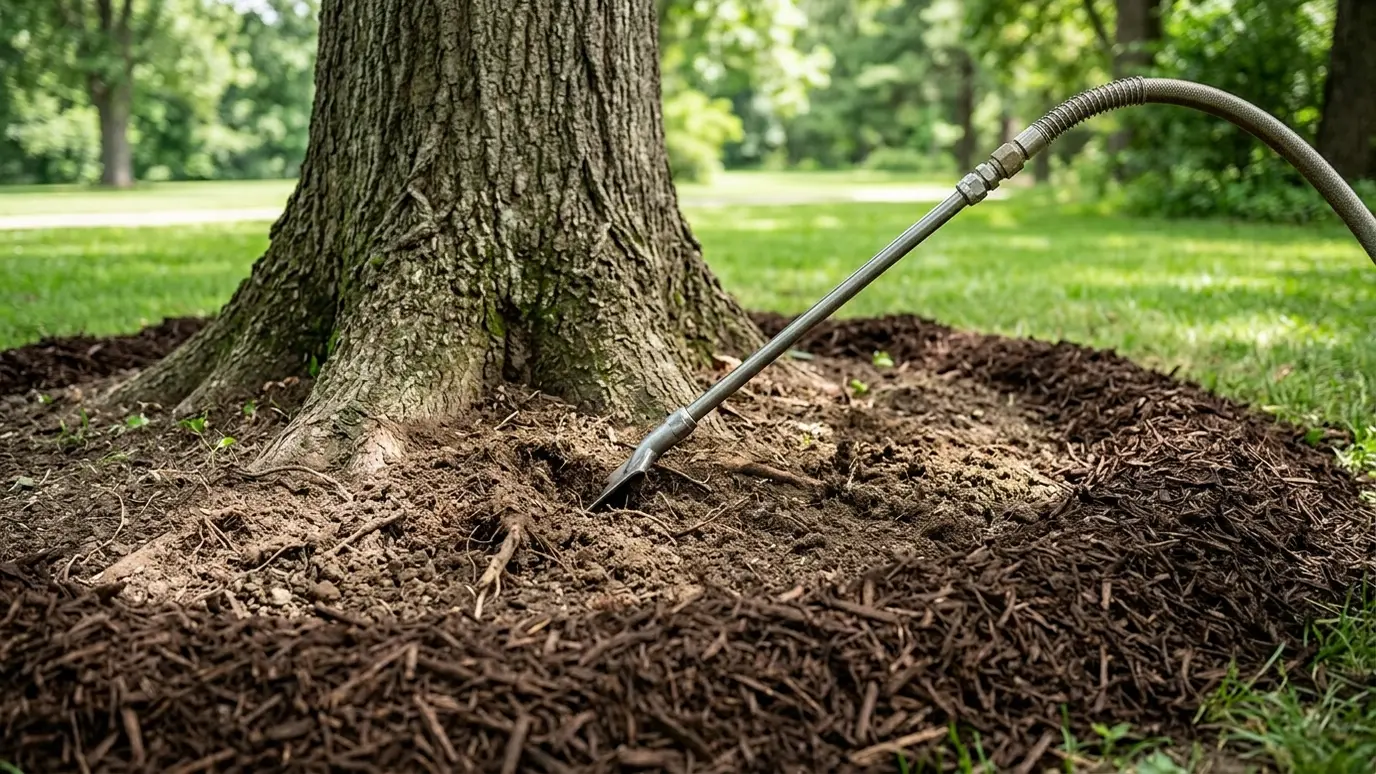 Soil Aeration and MulchingCompacted soil and bare ground are hard on trees. Aeration and proper mulching give roots air, water and…Explore
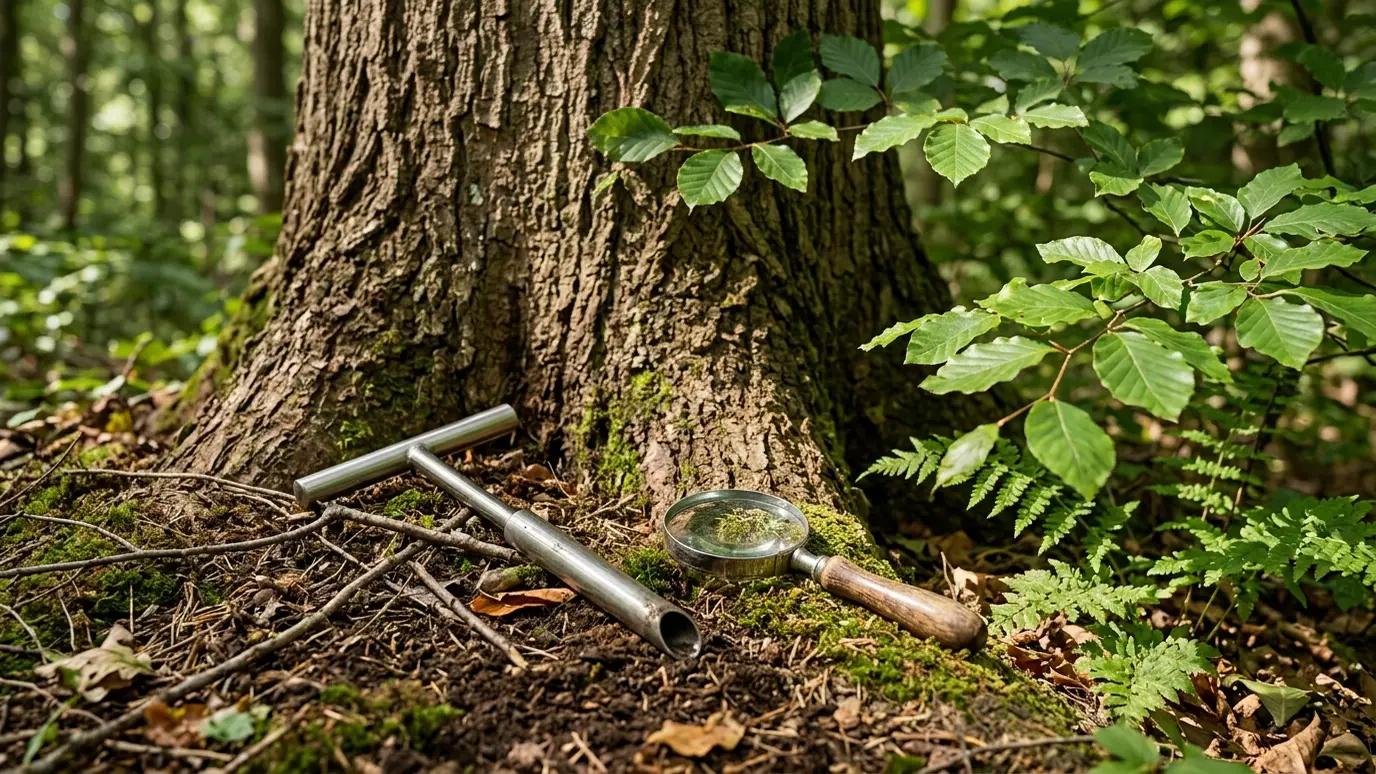 Tree Health AssessmentThin crown, odd leaf color, dying branches or mushrooms on the trunk: an arborist figures out what is…Explore
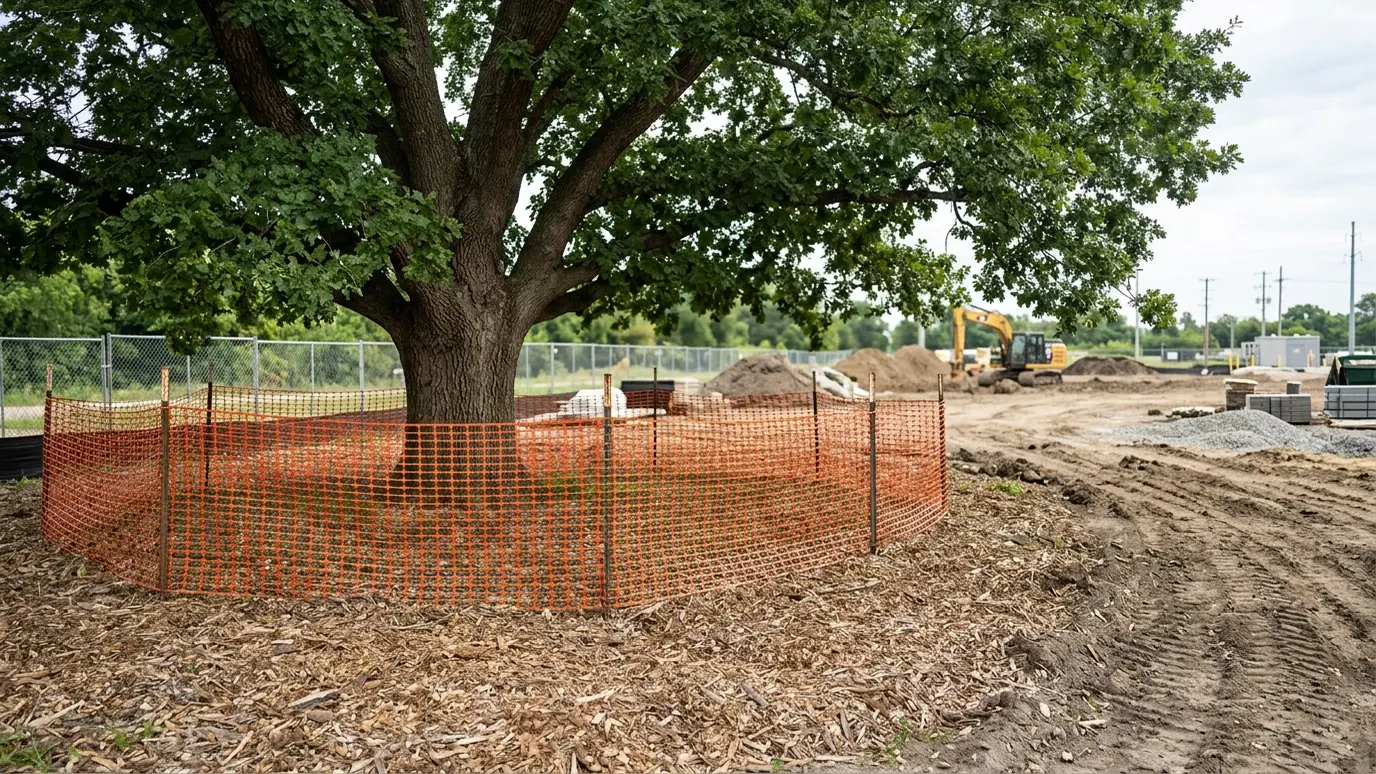 Tree PreservationValuable trees kept alive through a build, a remodel or a driveway, with a plan that protects roots…Explore
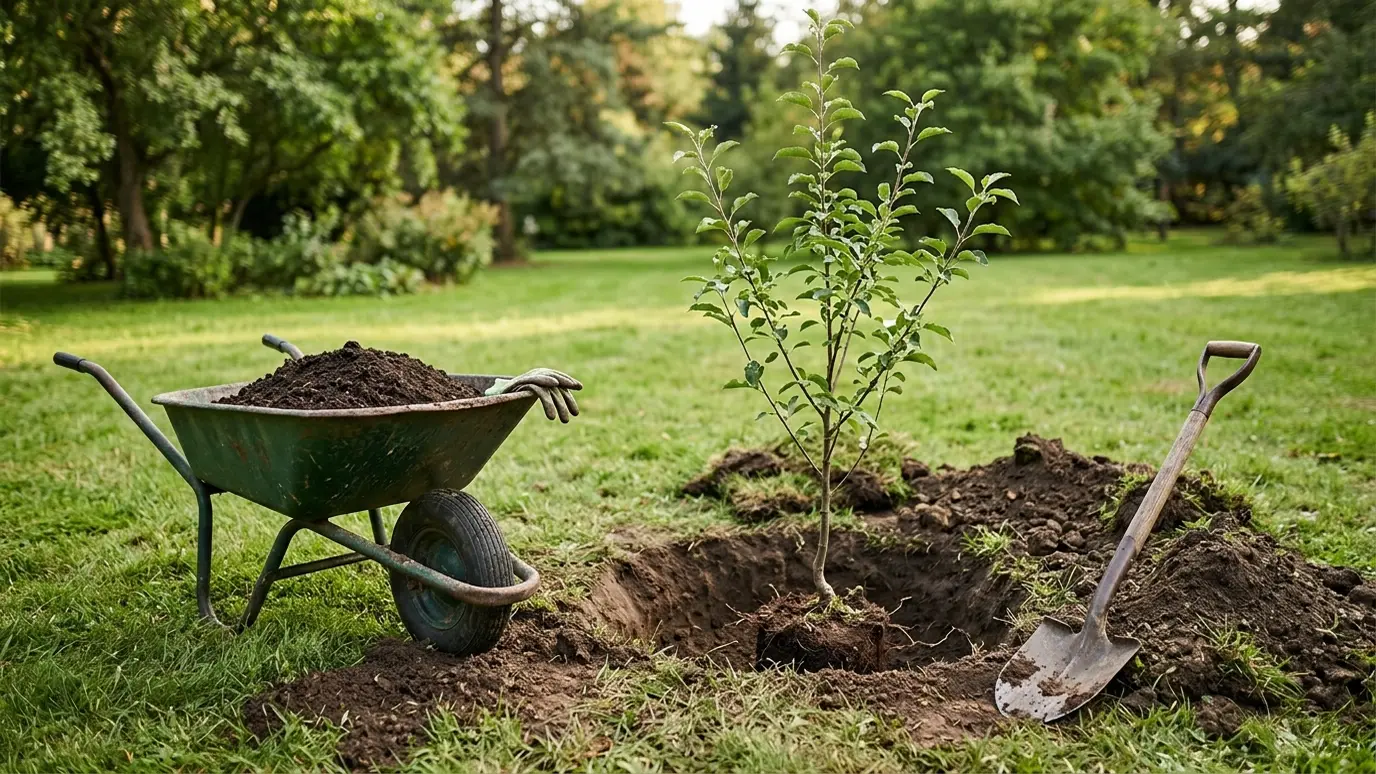 Tree PlantingThe right tree in the right place, planted correctly, so it thrives for generations instead of struggling for…Explore
Tell us about your tree and we will call you back quickly.
Or call (615) 357-7797 to talk now.