Trees that lean over homes, split at the trunk or hold dead wood overhead, assessed honestly and removed with extra care.
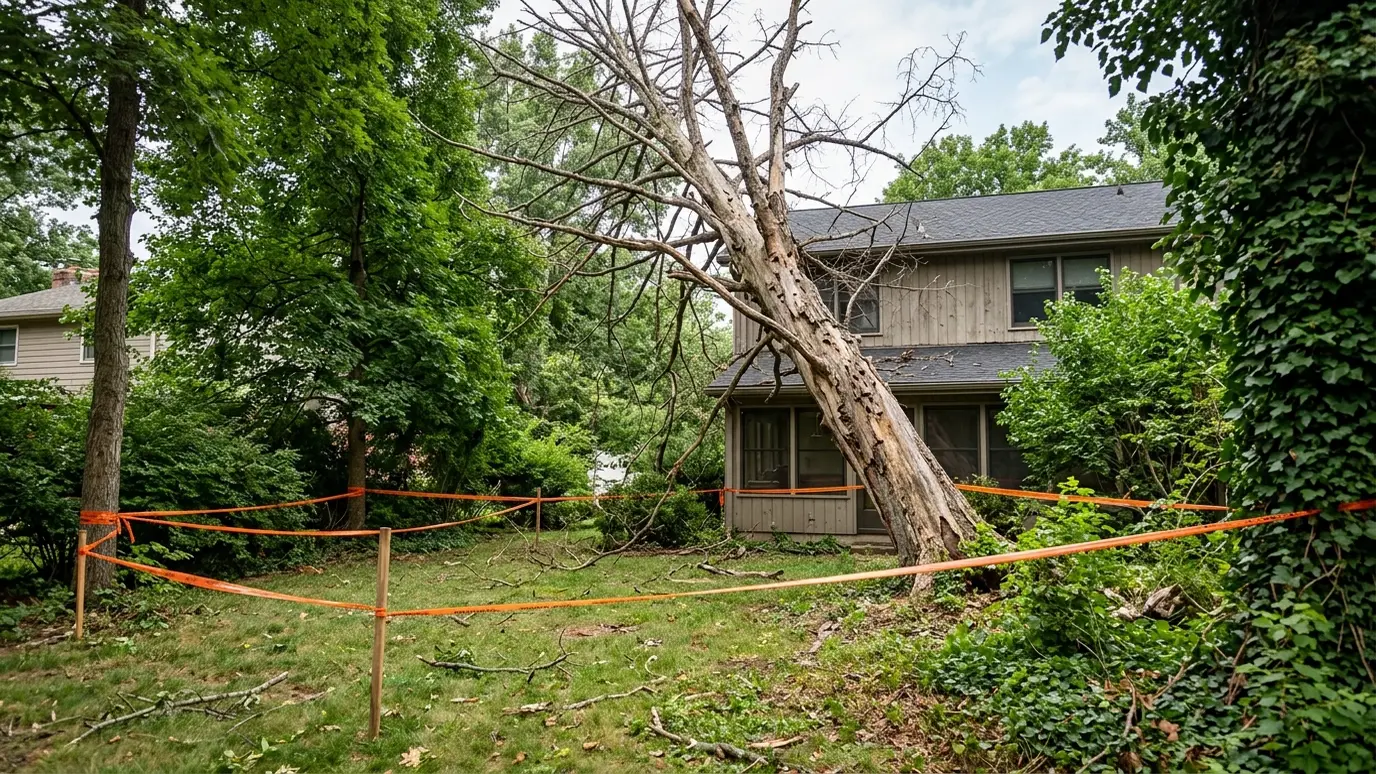
A hazardous tree is a tree with a target: a house, a driveway, a play area or a power line within reach of a failing trunk or limb. The tree may look healthy from the street, yet carry a crack, a decayed center or damaged roots that make it unpredictable. Knowing the difference takes training.
Our Certified Arborist inspects the tree from the roots to the crown, looks for defects and tells you plainly whether the risk is low, moderate or high, and what can reduce it. Sometimes pruning or cabling is enough. When removal is the right answer, we plan it around the target so the tree comes down without drama.
Dead or hanging limbs, cracks in the trunk, a large cavity, mushrooms or conks at the base, sudden lean, heaved soil on one side and codominant stems with a tight V-shaped union are all warning signs. A tree can show one or several.
A decayed tree in an empty field is a wildlife habitat, not a hazard. The same tree beside a bedroom is a serious risk. We weigh the defect, the size and the target, and recommend the least extreme action that makes the property safe.
Hazardous trees are often unstable to climb or rig. We choose methods that reduce the load on the tree before anyone is on it, such as a crane, a bucket truck or careful sectional cutting from a safe position.
Some hazards can be managed over time. A tree with a modest defect away from any target can be watched, and a tree with a manageable risk can be pruned or supported. We write down what to watch for and when to call us back.
We tell you what the tree is likely to do.
Roots to crown, defects documented.
Roofs, play areas and vehicles are planned for.
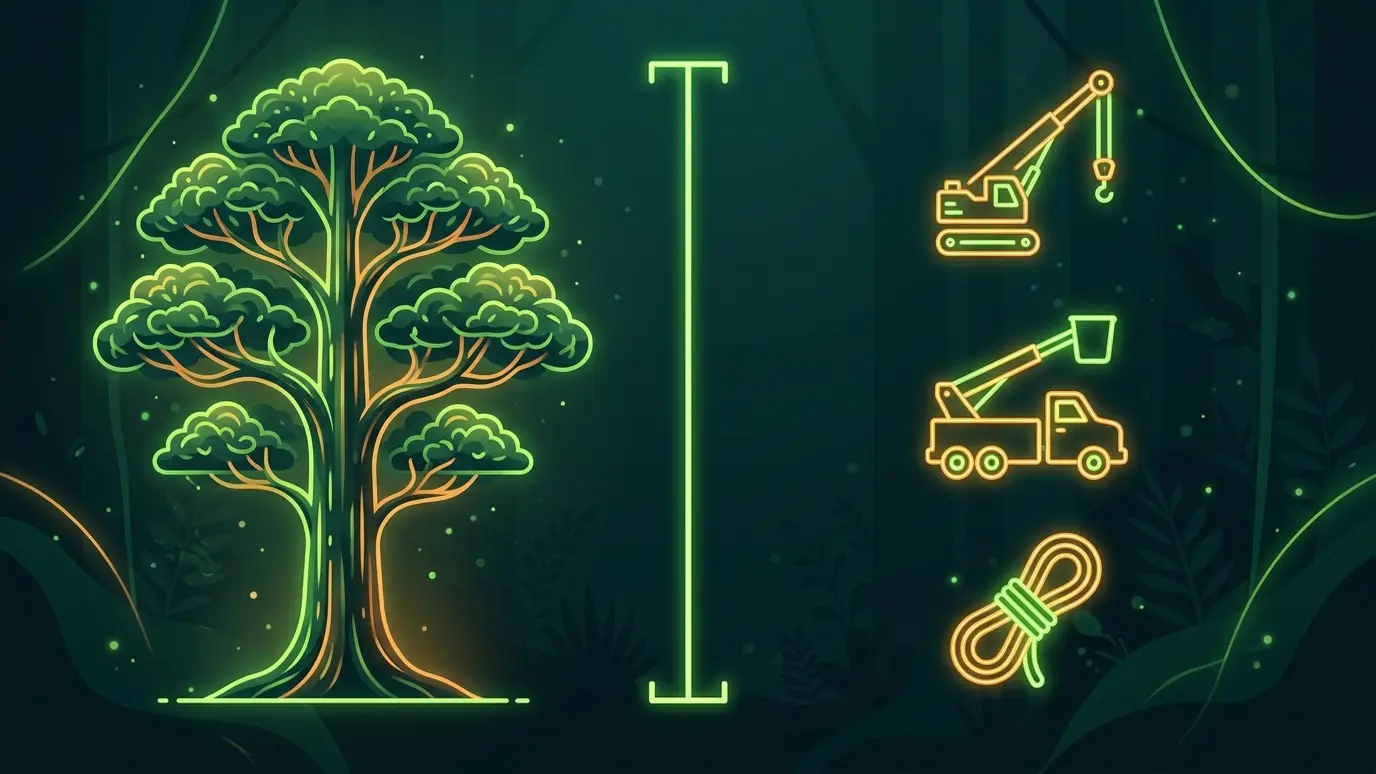
Cranes and bucket trucks where needed.
Pruning or cabling when it is enough.
High-risk trees are moved to the front.
Every topic has its own page with what to expect and how an arborist helps.
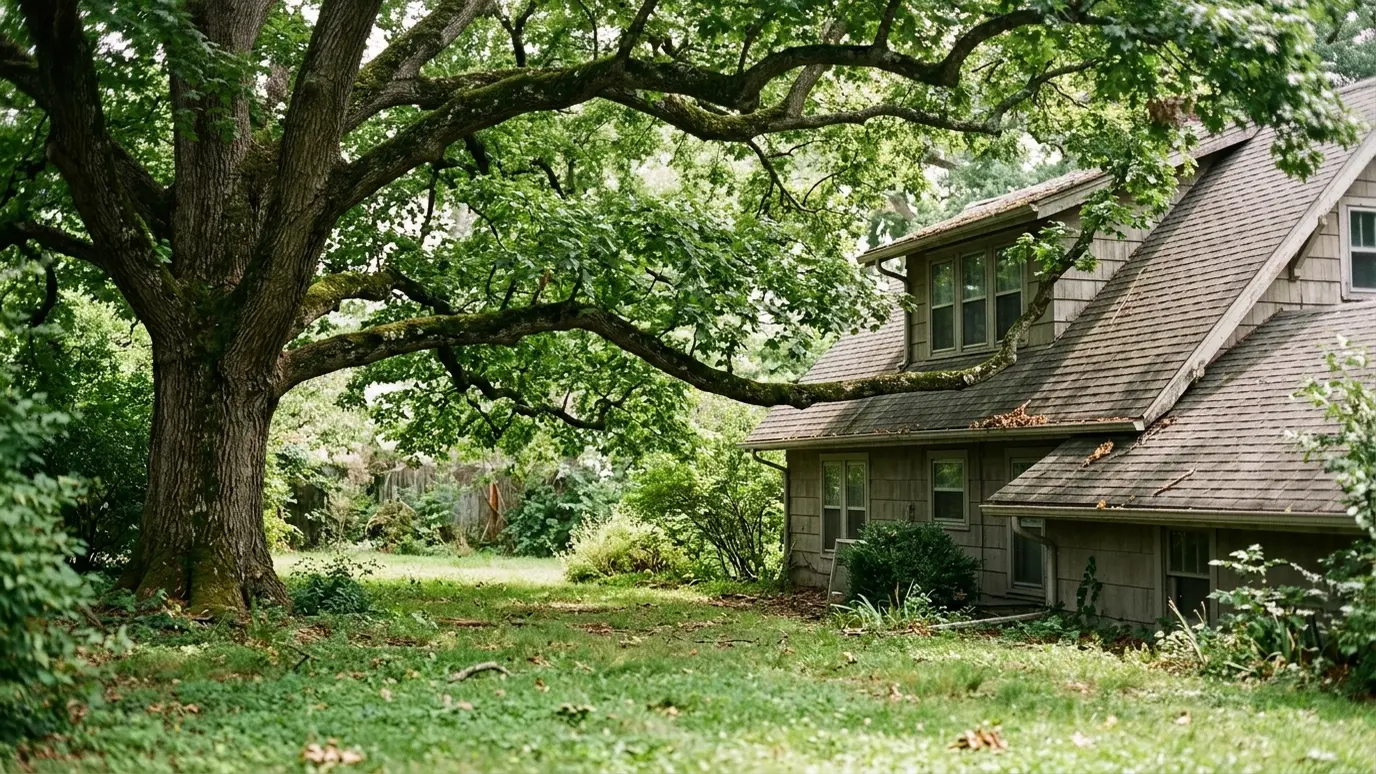 Common situationTrees Near the HouseBig trees beside a home bring shade and value, and risk. Here is how to tell whether yours…Learn more
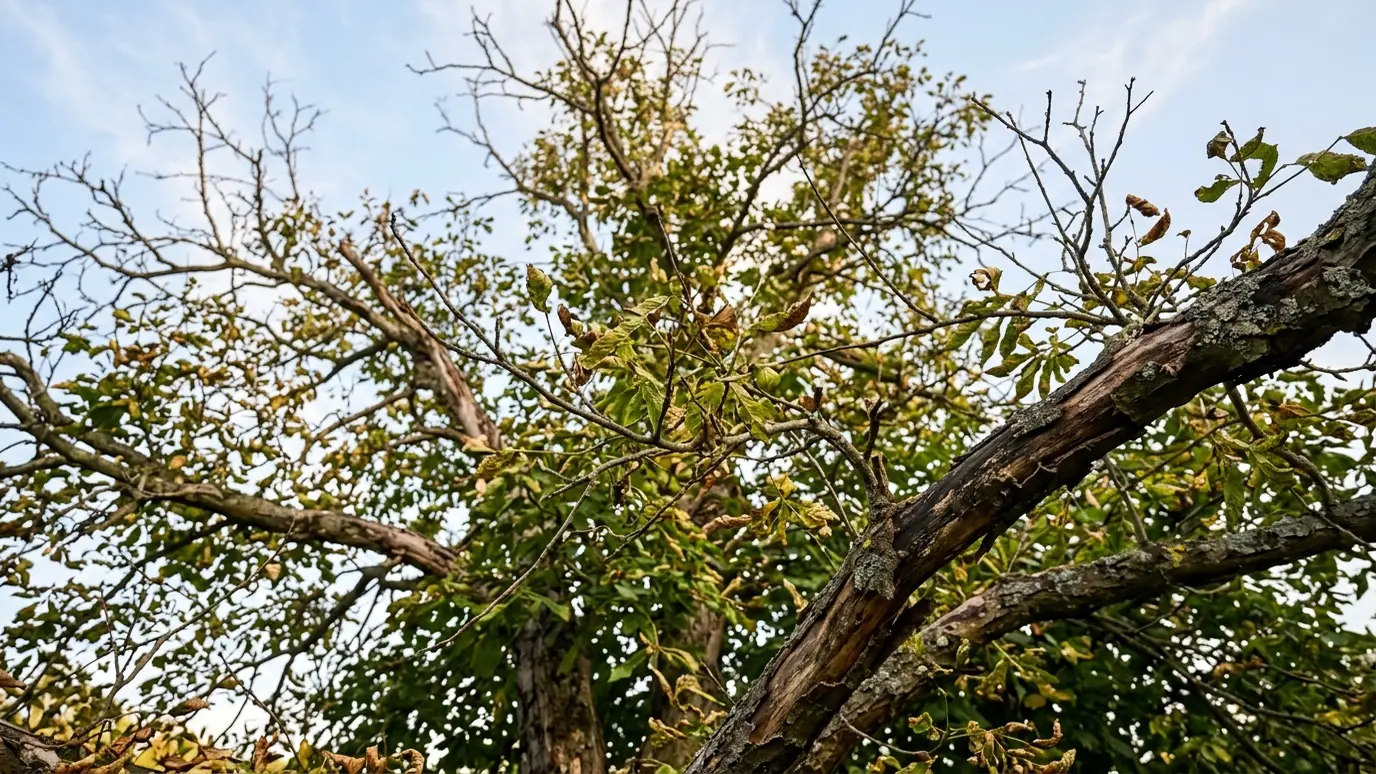 Common situationDeclining TreesThinning leaves, dying branches and odd growth are signals. Catch them early and many trees can recover.Learn more
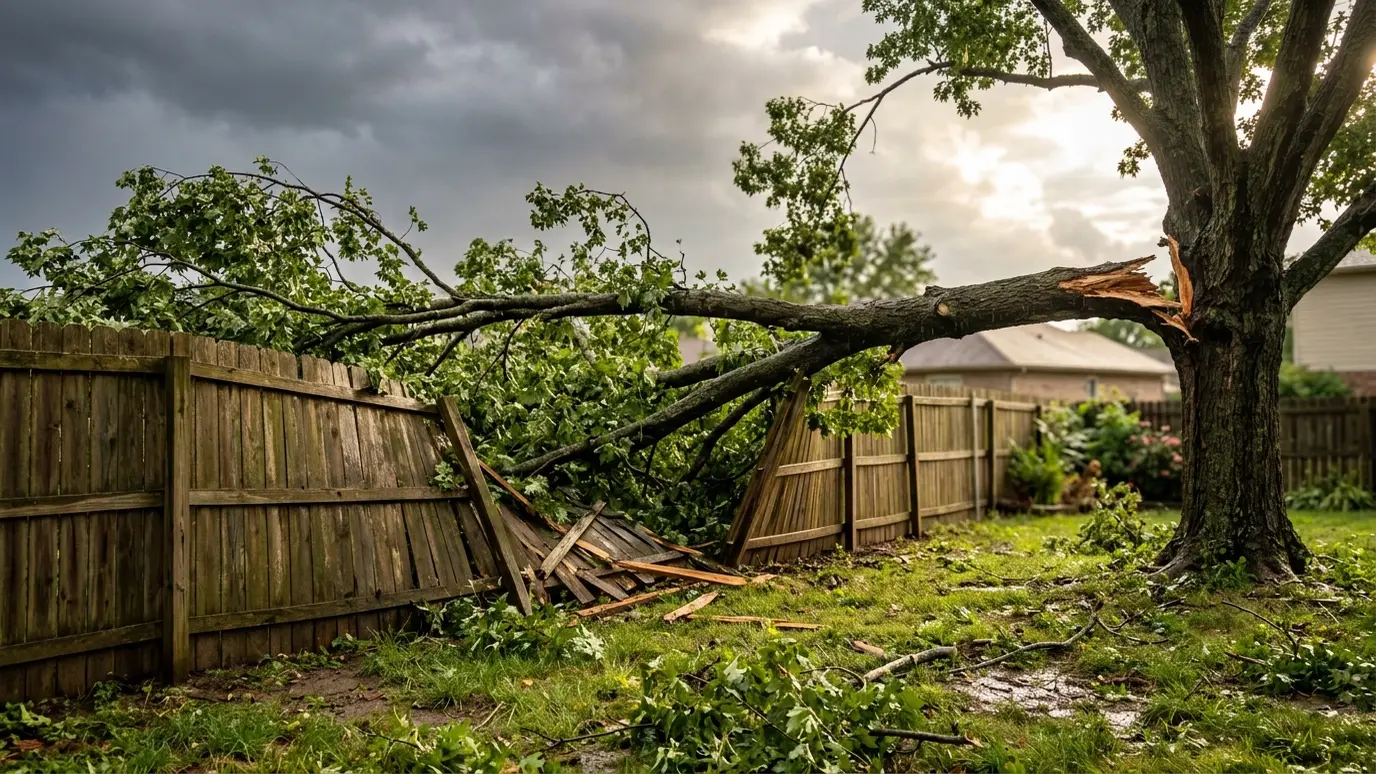 Common situationStorm DamageWind, ice and tornadoes leave trees broken, split and leaning. Knowing what to save and what to remove…Learn more
Check off what you see on the trunk, roots and crown and what is below the tree, and get a plain-language risk level.
Tell us what you see and what worries you. We give you safety tips right away.
A Certified Arborist looks at the tree, the site and the best method.
You get a written scope and price before any work begins.
Our crew rigs, cuts and lowers with your property protected.
We chip, haul, rake and walk the site with you.
We explain what the tree or property needs next and when to call us.
Look for dead limbs, cracks, cavities, mushrooms at the base and a lean that is new. If the tree is near a house or a walkway and you see any of these, have an arborist look at it soon.
Sometimes. Pruning, cabling or bracing can reduce the risk. If the defect is in the trunk or roots, removal is often the safest choice.
It depends on the defect and the target. A tree with a new lean over a house is urgent. A dead limb over a lawn is not. We tell you honestly.
Yes, on request. A written assessment is useful for insurance, for neighbors and for your own records.
Yes. A written arborist report can help neighbors discuss a shared tree with facts.
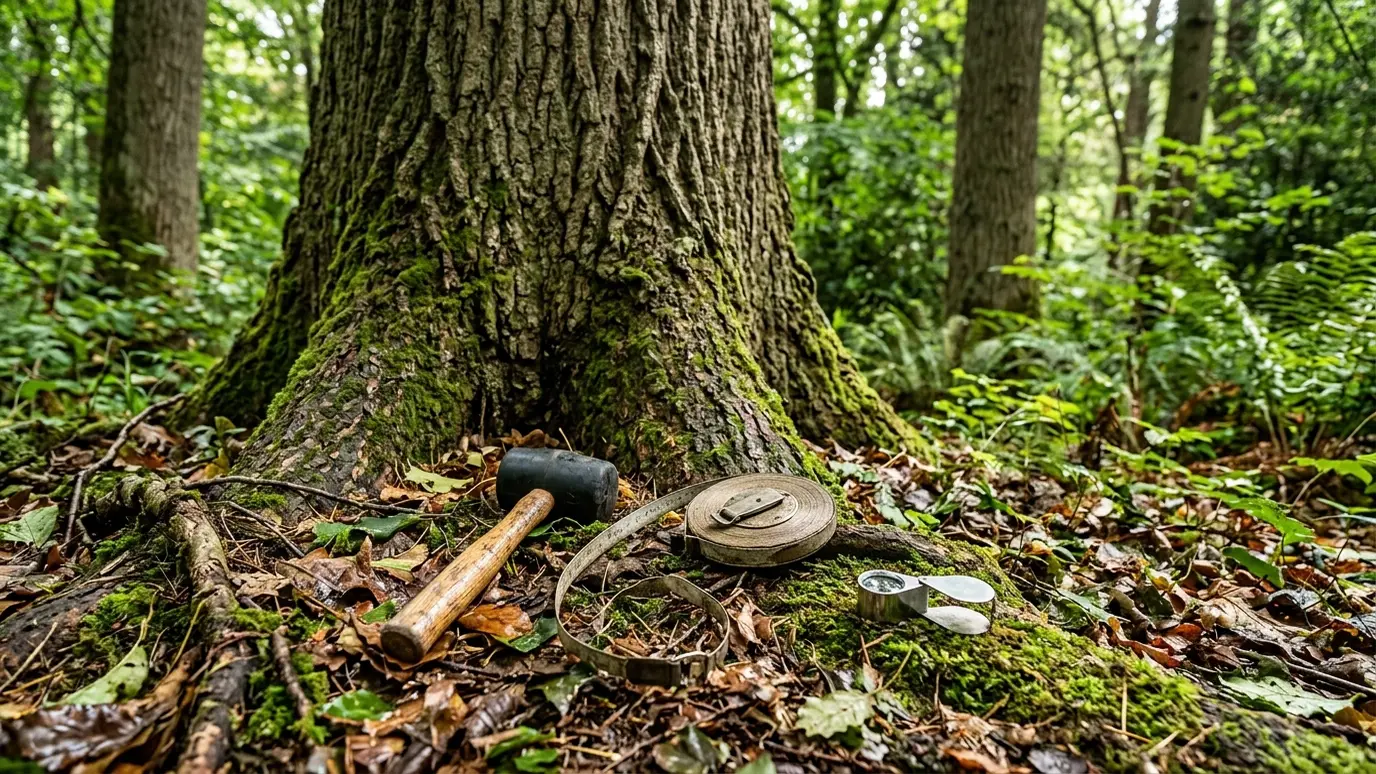 Tree Risk AssessmentA systematic look at whether a tree could fail, what it could hit and what to do about…Explore
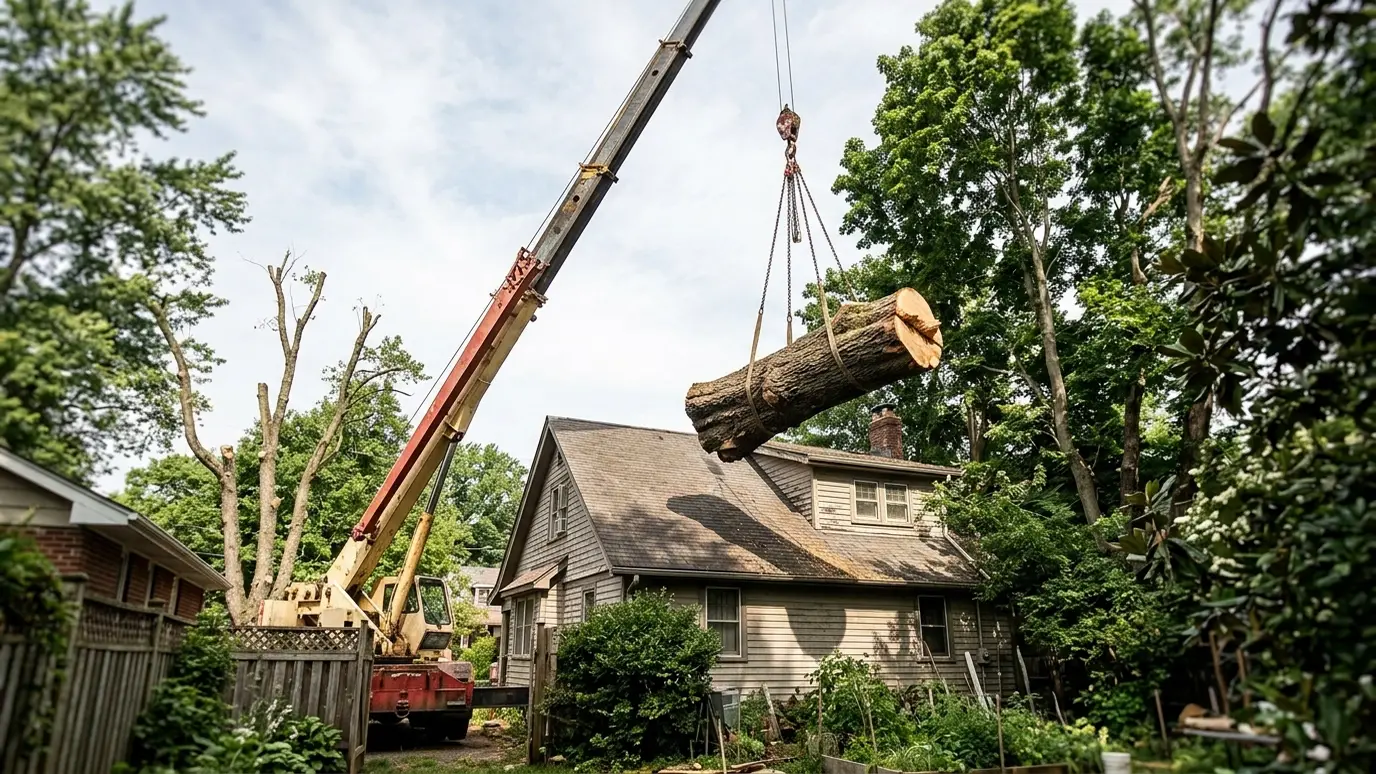 Crane-Assisted RemovalWhen a tree is too large, too close to a house or too unstable to climb, a crane…Explore
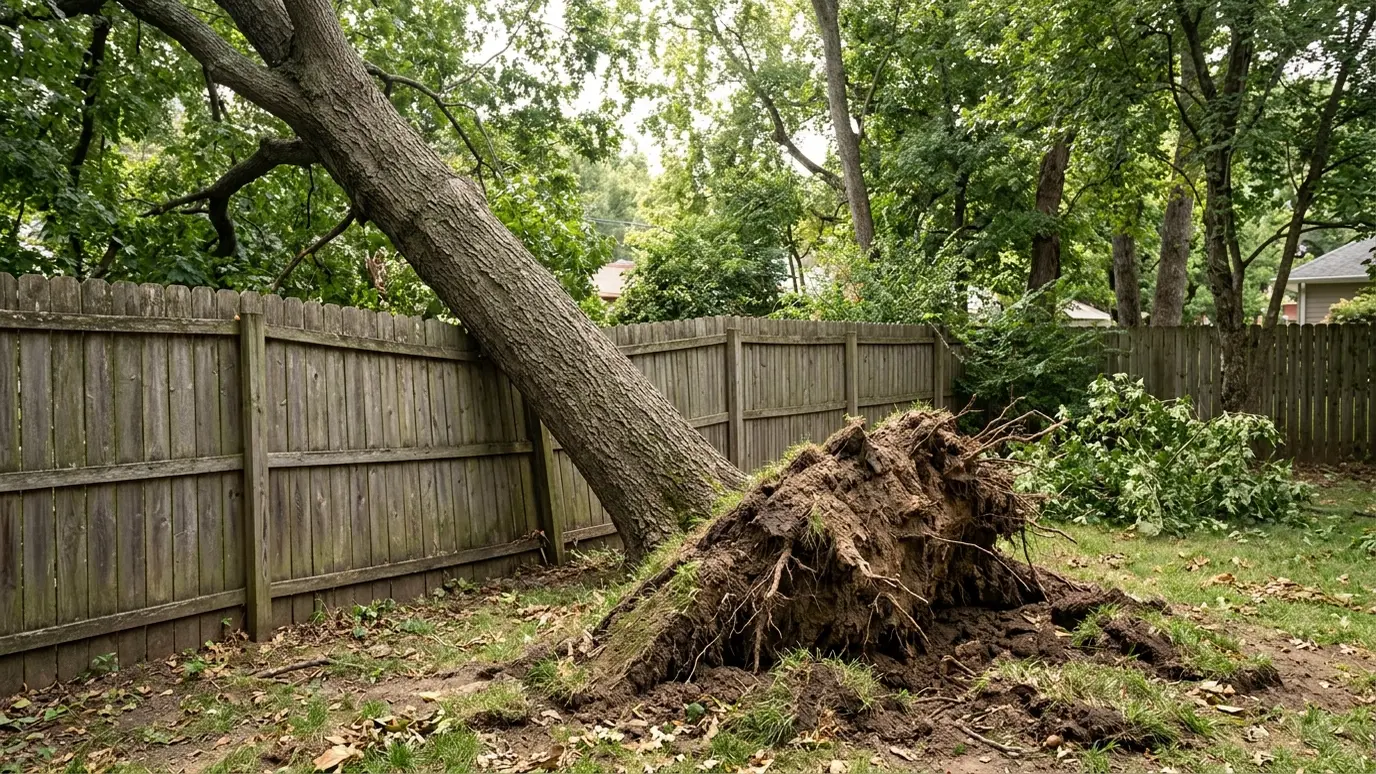 Leaning Tree RemovalA tree that has started to lean toward a house is a tree to take seriously. We assess…Explore
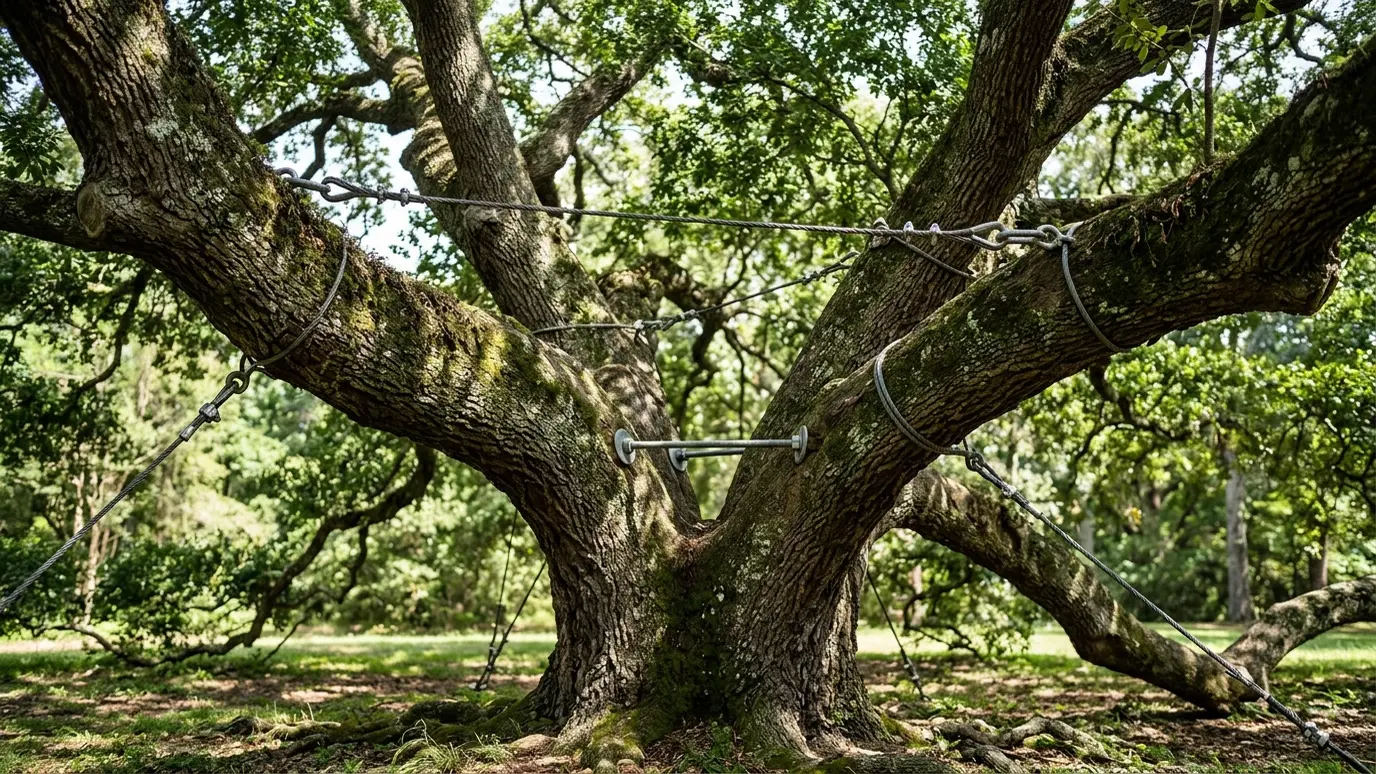 Cabling and BracingWeak unions and heavy limbs supported with cables and braces, so valuable trees can stay safely.Explore
Tell us about your tree and we will call you back quickly.
Or call (615) 357-7797 to talk now.