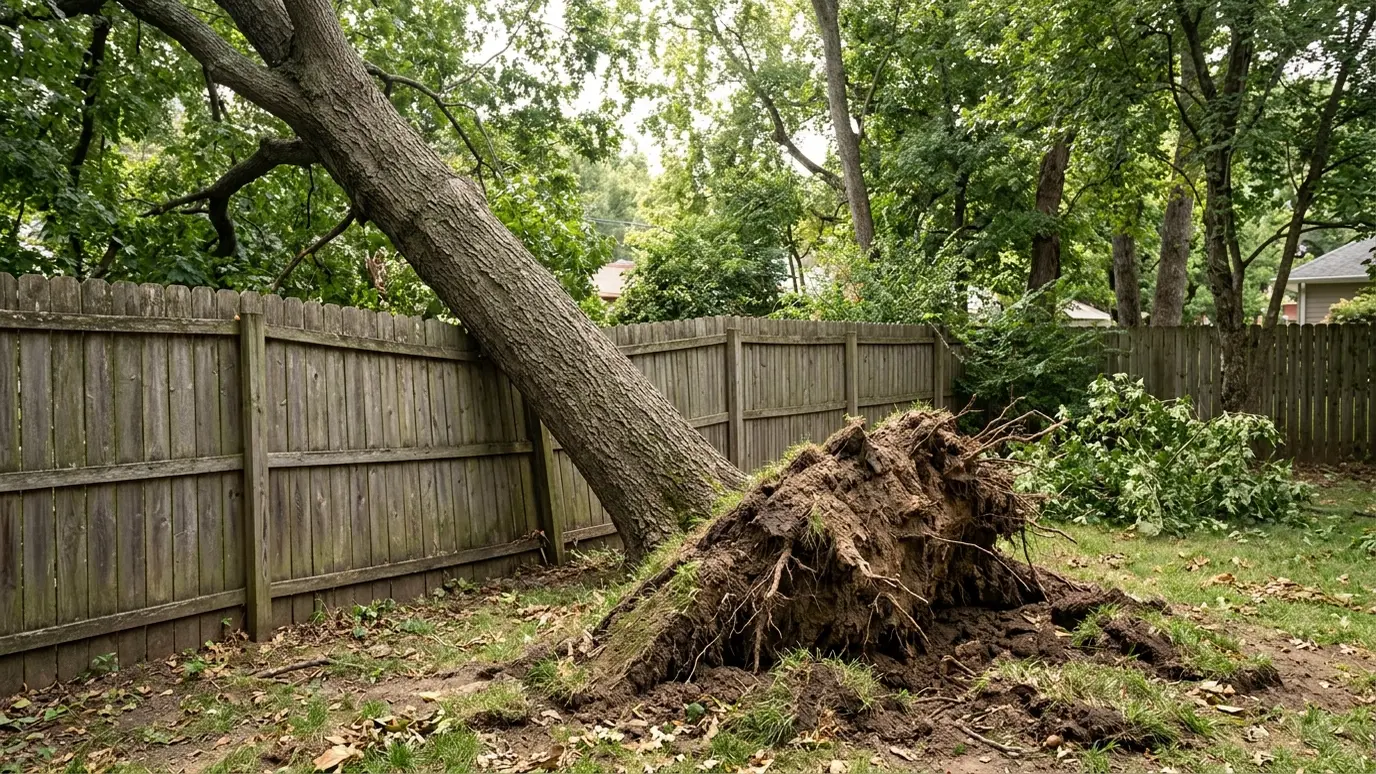
A tree that has started to lean toward a house is a tree to take seriously. We assess the roots and the trunk and act accordingly.
Many trees lean a little and stay that way for decades. A lean that is new, or that is getting worse, is different. It can signal that the roots are letting go, that the soil is saturated or that the trunk has been damaged. If a house or a driveway is in the path, the stakes are high.
A Certified Arborist checks for soil heaving on the side opposite the lean, new cracks in the soil or pavement, exposed roots and signs of decay at the base. If the tree is still anchored and the lean is old, we may recommend monitoring or pruning. If the roots are failing, we plan a removal that works with the lean, not against it.
Trees that grew toward light develop a curved trunk that is stable. A lean that appeared after a storm, with soil mounded on one side, is a warning. Take photos with a fixed reference like a fence post so you can see whether it is changing.
We look at the root plate: lifted soil, snapped roots, mushrooms and standing water. A tree on soaked soil is less stable. Our crews are careful not to add load or vibration that can tip a tree that is barely holding.
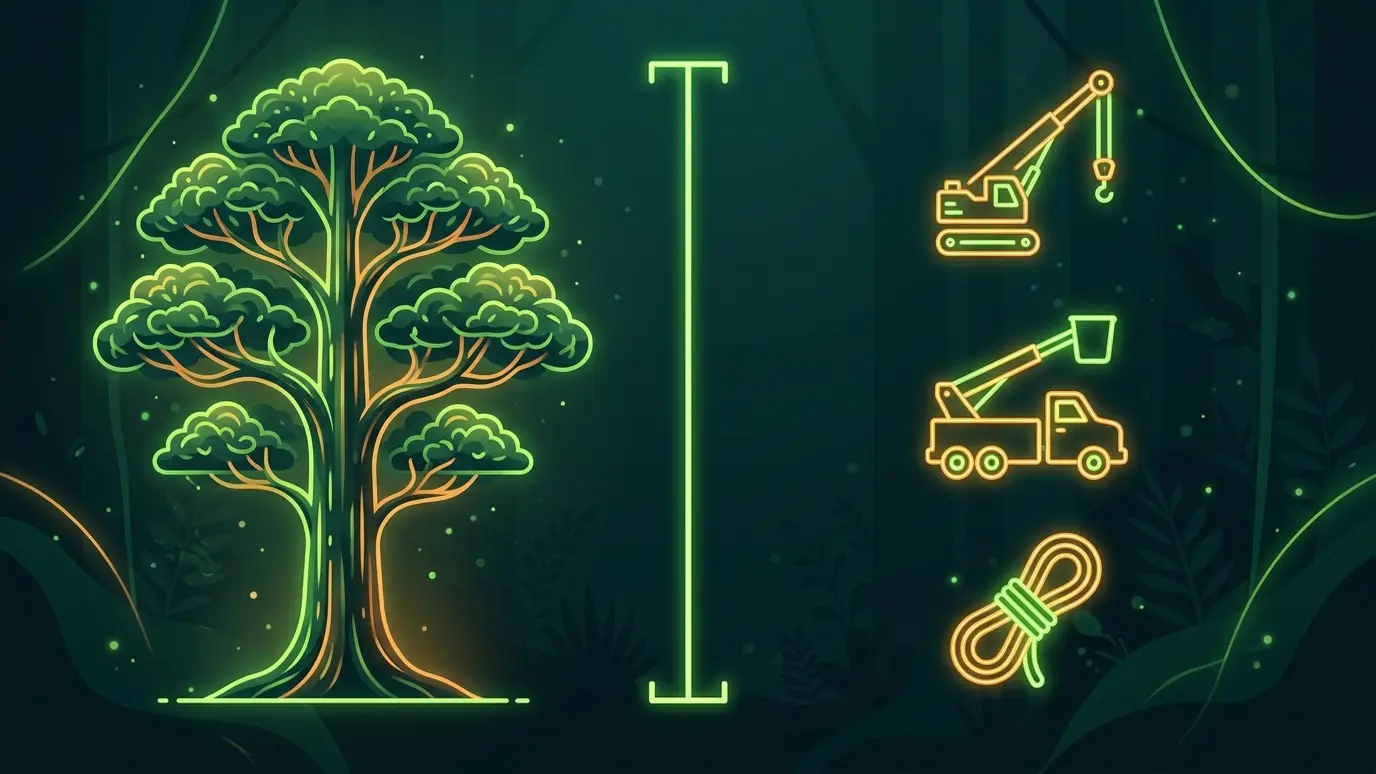
A leaning tree has a mind of its own. Rigging, a crane or a bucket truck lets us take weight off the lean side first and cut in a controlled order, so the trunk does not swing or spring.
If a tree leans but looks stable, you can monitor it. Take photos from the same spot every few months, watch for soil lifting or new cracks and call us after heavy rain or storms. A change is a signal.
Roots and trunk checked for failure.
Roofs and driveways planned for.
Weight controlled before cutting.
Monitor, prune or remove, whichever fits.
New leans are moved up.
Debris hauled and yard raked.
Every topic has its own page with what to expect and how an arborist helps.
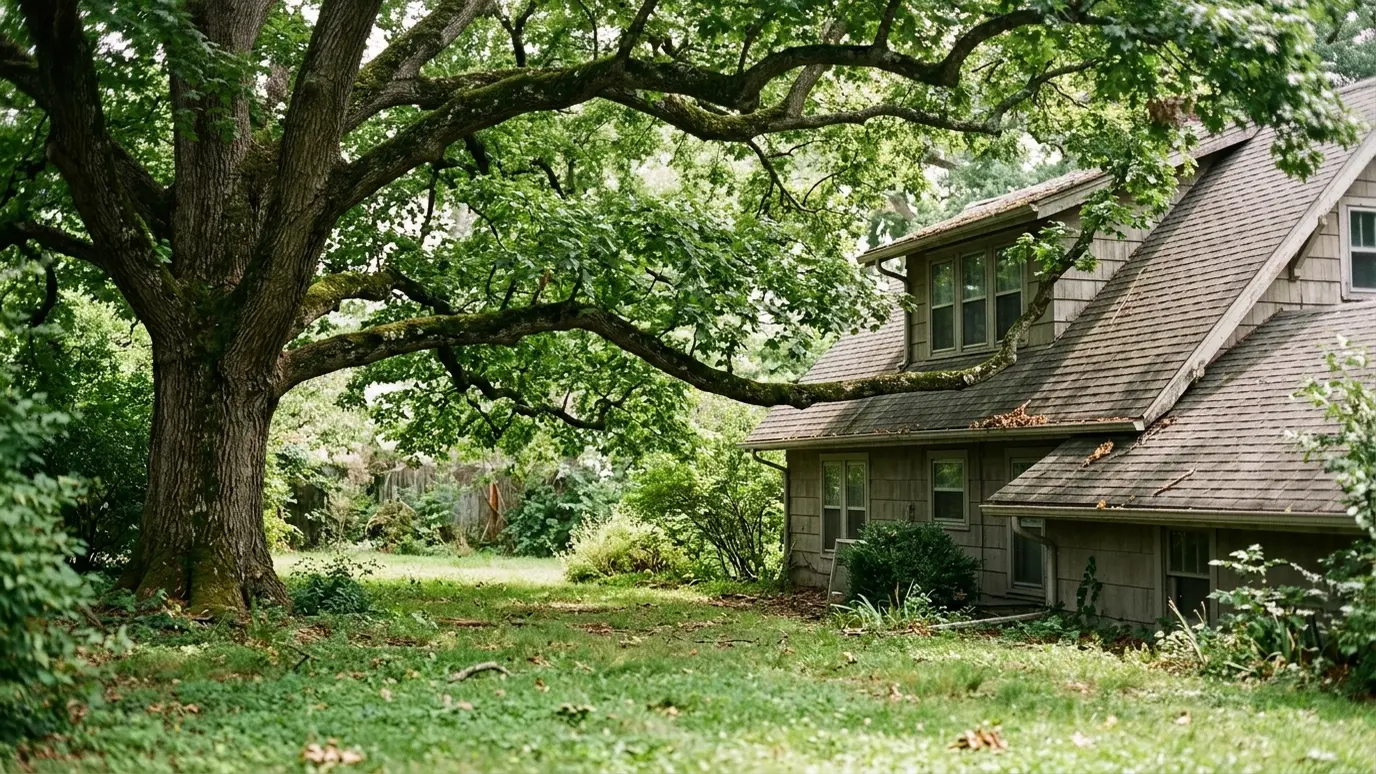 Common situationTrees Near the HouseBig trees beside a home bring shade and value, and risk. Here is how to tell whether yours…Learn more
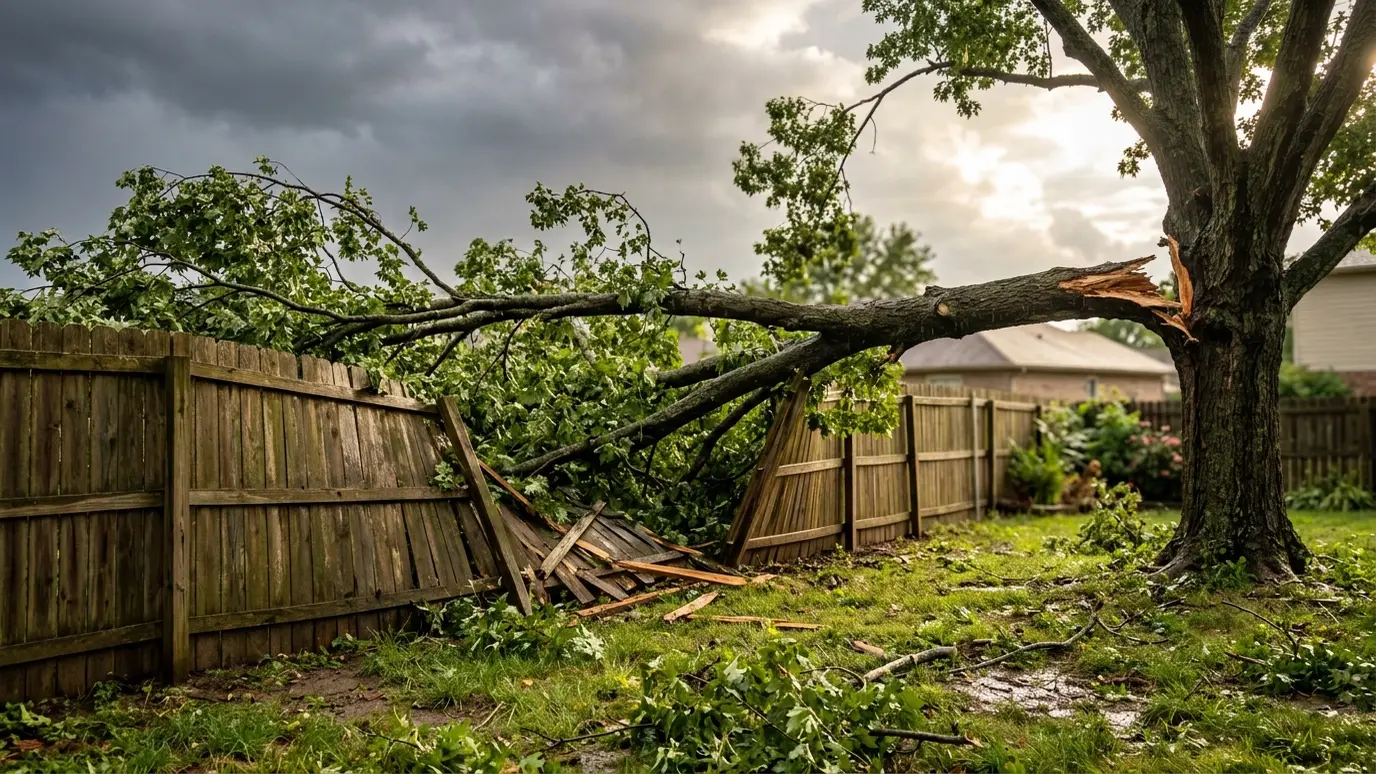 Common situationStorm DamageWind, ice and tornadoes leave trees broken, split and leaning. Knowing what to save and what to remove…Learn more
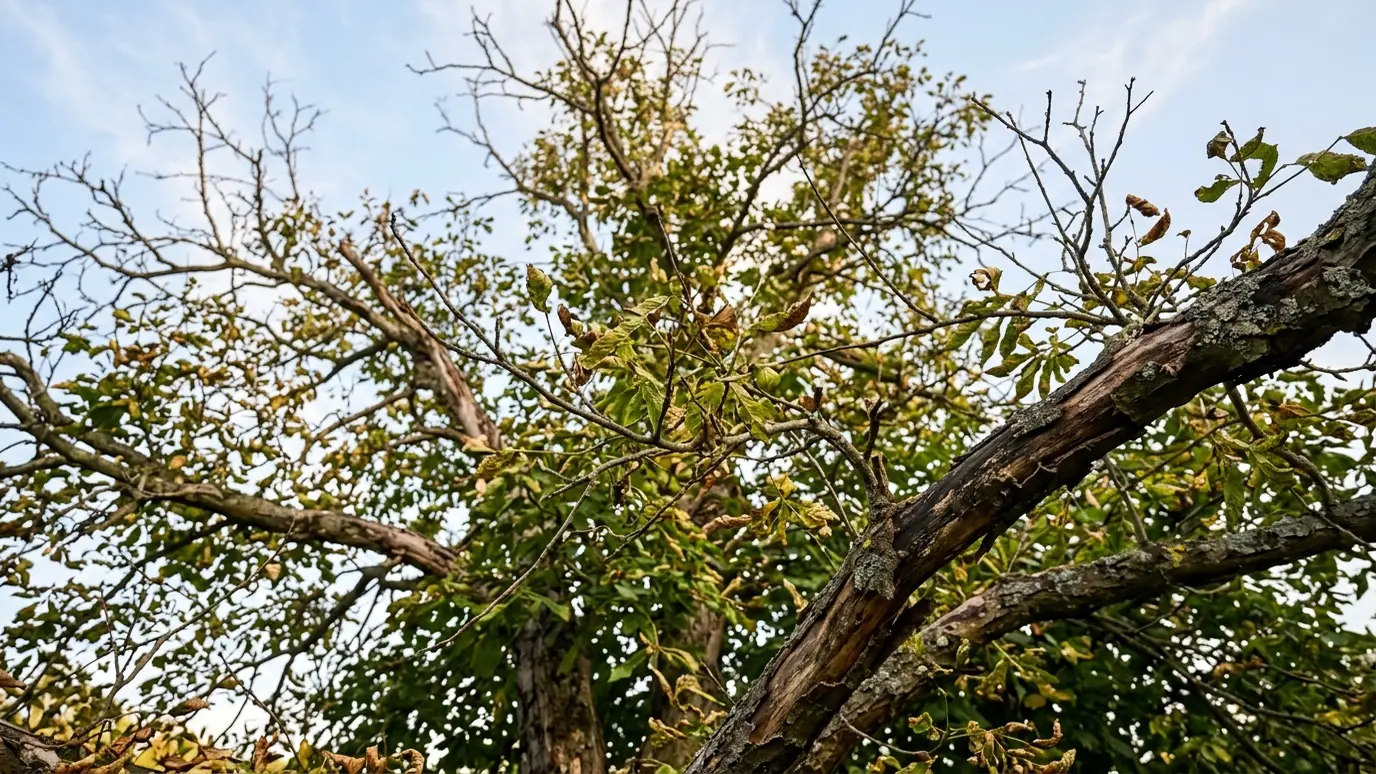 Common situationDeclining TreesThinning leaves, dying branches and odd growth are signals. Catch them early and many trees can recover.Learn more
Check off what you see on the trunk, roots and crown and what is below the tree, and get a plain-language risk level.
Tell us what you see and what worries you. We give you safety tips right away.
A Certified Arborist looks at the tree, the site and the best method.
You get a written scope and price before any work begins.
Our crew rigs, cuts and lowers with your property protected.
We chip, haul, rake and walk the site with you.
We explain what the tree or property needs next and when to call us.
Not necessarily. Old leans are often stable. A new lean, soil lifting and cracks are warning signs, so have it checked soon.
Large trees cannot be straightened. We can sometimes reduce the risk with pruning or cabling.
Treat that as a priority and call us. Stay out of the fall zone until it is checked.
With rigging and sequence. We take weight off the lean side first and avoid dropping the trunk in the lean direction.
Sometimes a cable or brace reduces risk in a tree with a lean from limb weight. It does not fix a failing root system.
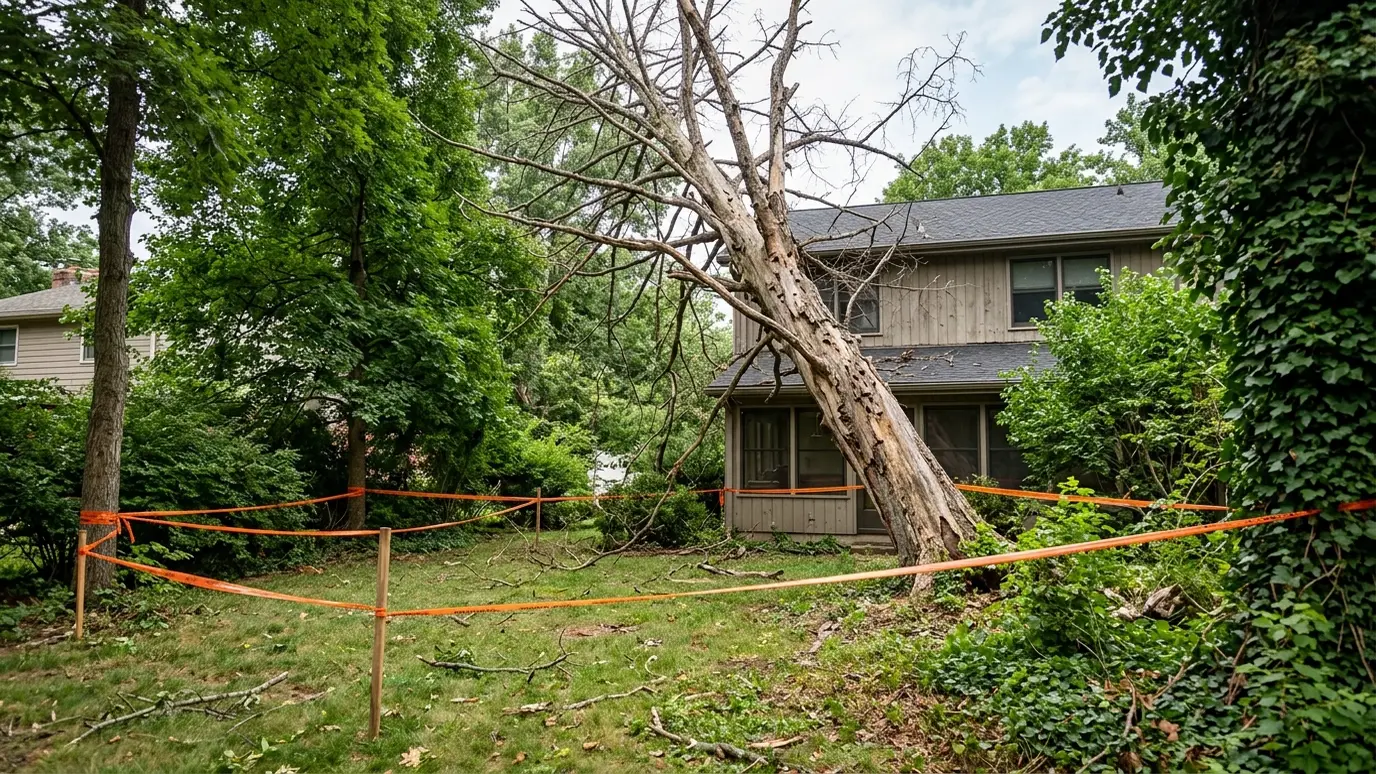 Hazardous Tree RemovalTrees that lean over homes, split at the trunk or hold dead wood overhead, assessed honestly and removed…Explore
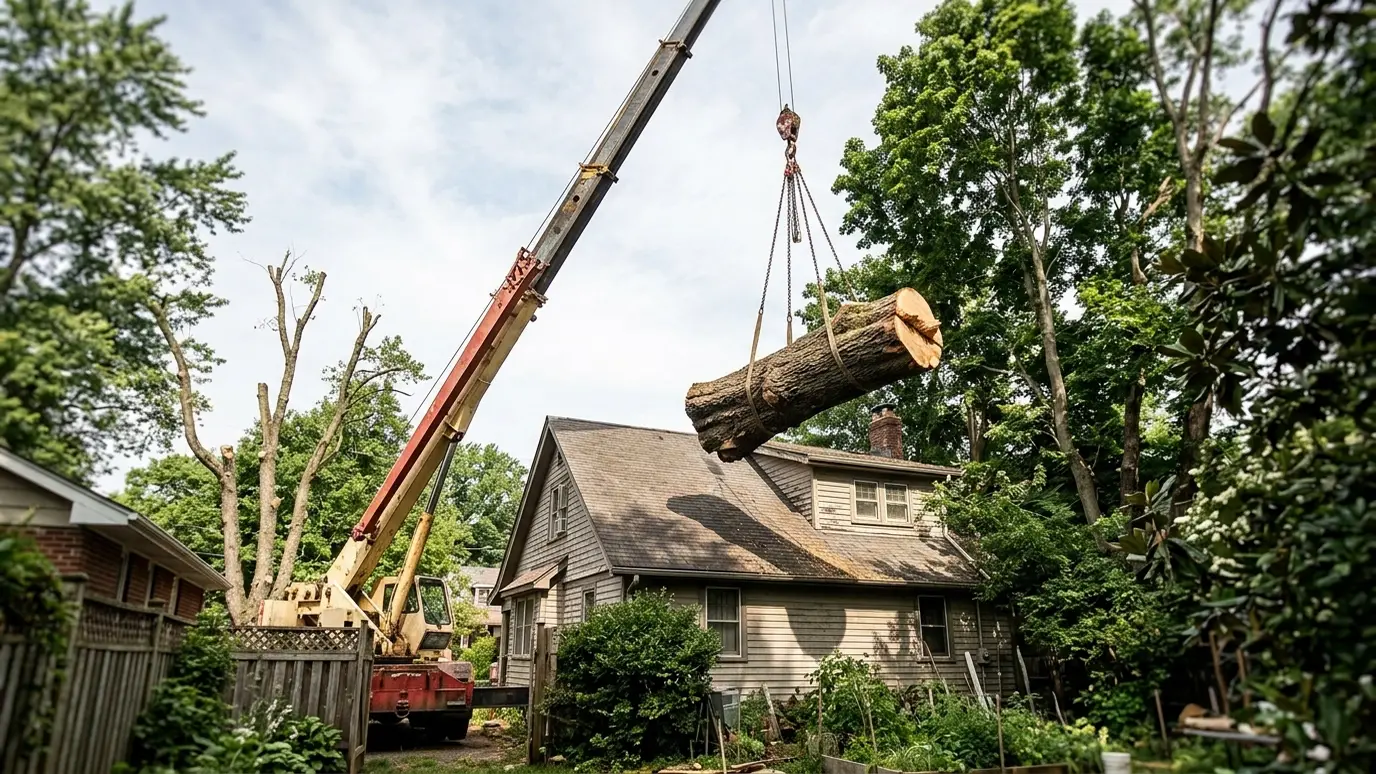 Crane-Assisted RemovalWhen a tree is too large, too close to a house or too unstable to climb, a crane…Explore
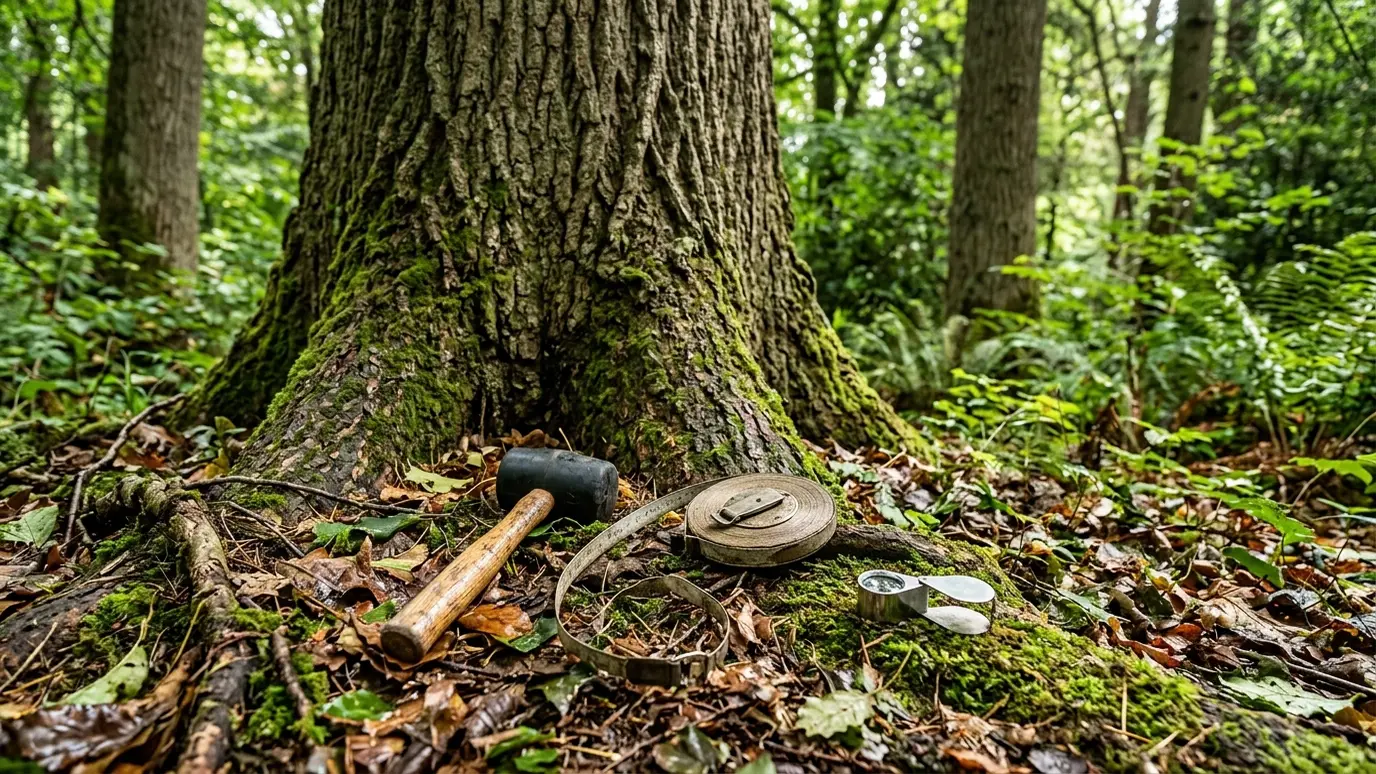 Tree Risk AssessmentA systematic look at whether a tree could fail, what it could hit and what to do about…Explore
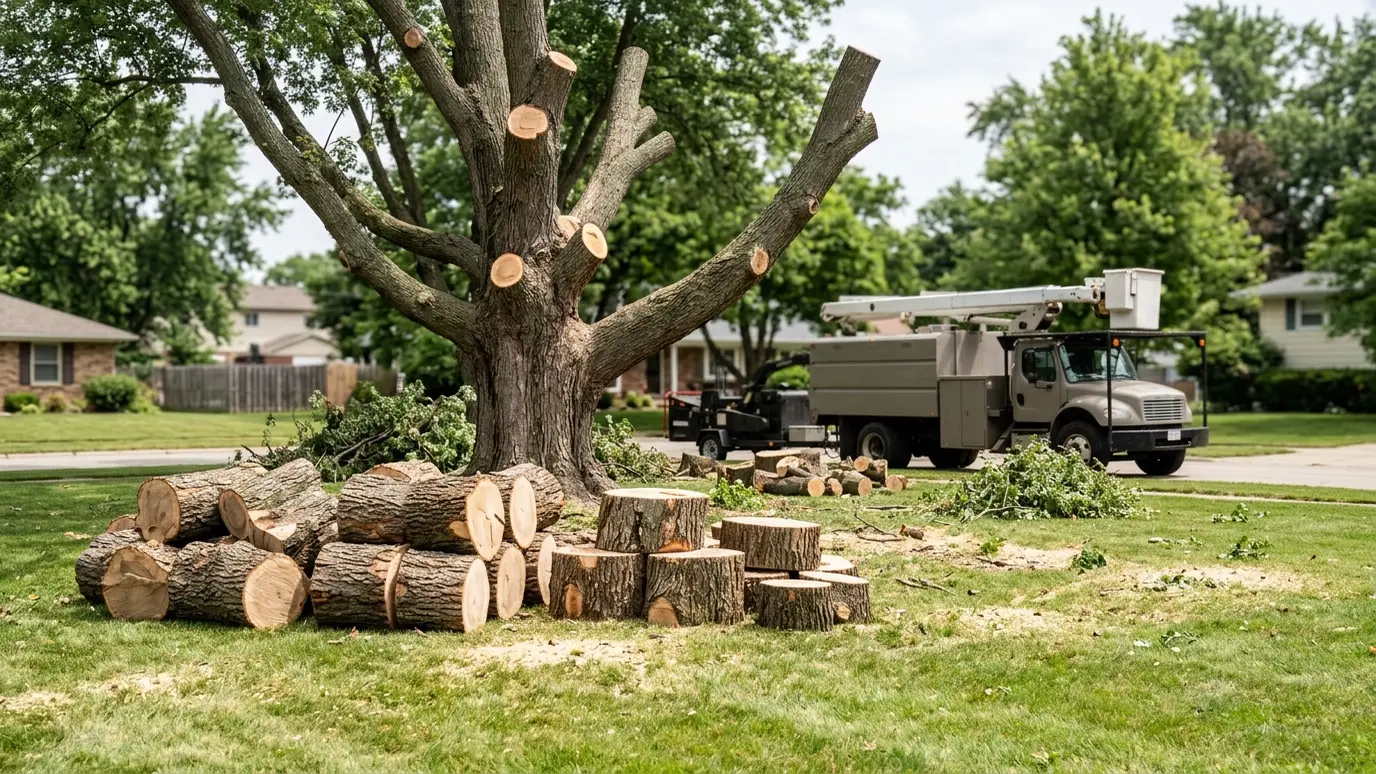 Tree RemovalSafe, planned removal of trees of every size, from a single backyard maple to a stand of oaks…Explore
Tell us about your tree and we will call you back quickly.
Or call (615) 357-7797 to talk now.